
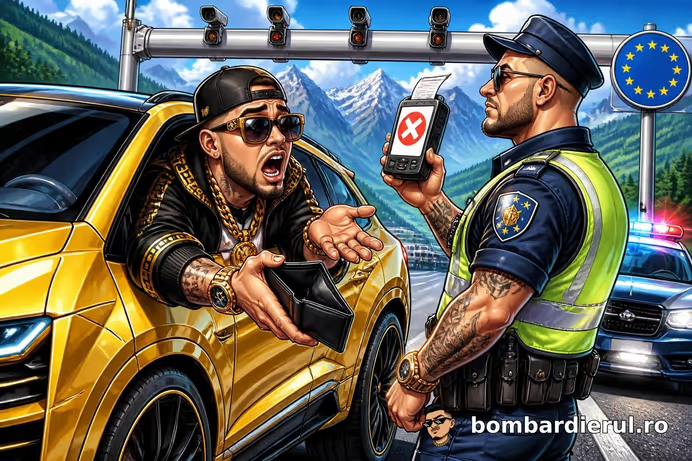
Well, what do you know! Vacation is coming, and everyone's hitting the road to Europe. But hold your horses, 'cause it ain't that simple. I sat down with a guy who got burned last summer - he drove into Austria without a vignette and got slapped with a 120-euro fine. And he's not the only one! So I figured I'd give you a little guide, so you don't end up paying fines instead of munching shawarma on the beach.
Europe has three toll systems, bro. First: pay-per-kilometer - you pay at the barrier or via tele-toll. That's in Italy, France, Spain, Portugal, Croatia, and Greece. Second: the vignette - a pass for a few days, a month, or a year, mandatory in Central and Eastern Europe, including Switzerland and Austria. Third: free highways - in Germany, Benelux, and most of Scandinavia. You think it's simple? Well, if you take a trip crossing three countries, you might run into all three. So keep your eyes on the GPS, don't think you know it all.
The Swiss vignette is annual and costs 40 francs, about 42 euros, no matter how long you stay. In Austria, you have options for ten days, two months, or a year; the annual one is around 106 euros, and the fine for not having it starts at 120 euros. Slovenia has a digital vignette linked to your license plate: 16 euros per week, 117.50 per year. And as of this year, the coastal highway to Koper and Izola became free - see, good things can happen! Vignettes are also mandatory in Czechia, Slovakia, Hungary, Romania, and Bulgaria, mostly digital.
France, Spain, Portugal, and Italy charge by distance. If you cross borders often, get yourself a European tele-toll device, otherwise you'll be stuck in line at the barrier like those who don't know how to pay. Croatia, Greece, and some parts of Poland do the same. Norway has an automatic system, especially at city entrances - watch out, or you'll get a bill at home.
Now, the good part: where is it free? Germany is famous - free highways, except for a few tunnels. Belgium, Luxembourg, and the Netherlands have a free network, with few exceptions like the Liefkenshoek tunnel. In Scandinavia, Denmark, Sweden, and Finland have free highways, but the Øresund Bridge - the one linking Sweden to Denmark - has a separate toll.
Watch out, 'cause the vignette doesn't cover major alpine tunnels or international bridges. Austria is the champ at this: even with a vignette, you pay extra on the Brenner Highway and the Tauern, Arlberg, Pyhrn, and Karawanken tunnels, between 7 and 15 euros per crossing. Similarly, the Mont Blanc Tunnel, Fréjus, and Gran San Bernardo cost around 30 euros. So don't get too happy that you have a vignette - you'll still have to whip out your wallet.
To avoid fines, plan your route ahead. At every border, check what toll system awaits you. Vignettes can be bought online, directly from the official highway operator's site - don't give money to resellers, 'cause they pop up first on Google and jack up prices. Check the start date of validity and your vehicle category. Fines? From 120 euros in Austria, up to 300-800 euros in Slovenia. Checks are automatic - cameras read your license plate, zero tolerance. So don't try to be a smartass, 'cause you'll get caught.
And in Romania, extreme weather has messed up traffic on the A3. Several counties, including Dolj and Olt, were under red and yellow codes for atmospheric instability - torrential rain, gales, hail. On the A3, visibility was low, and drivers drove cautiously due to water on the road. Authorities sent RO-ALERT messages, recommending avoiding travel. What can I say, seems like we can't escape trouble even at home.
Anyway, I'm packing my bags and checking my vignette ten times before I leave. You do the same, 'cause you don't want to start your vacation with an 800-euro fine. Good luck and safe travels!